THE PLAN — DUBAI 2040
Dubai Vision 2040 Urban Master Plan — Documented in Real Time
The most ambitious urban plan in the World — tracked from announcement to realization, area by area, policy by policy.
A City Built By Design
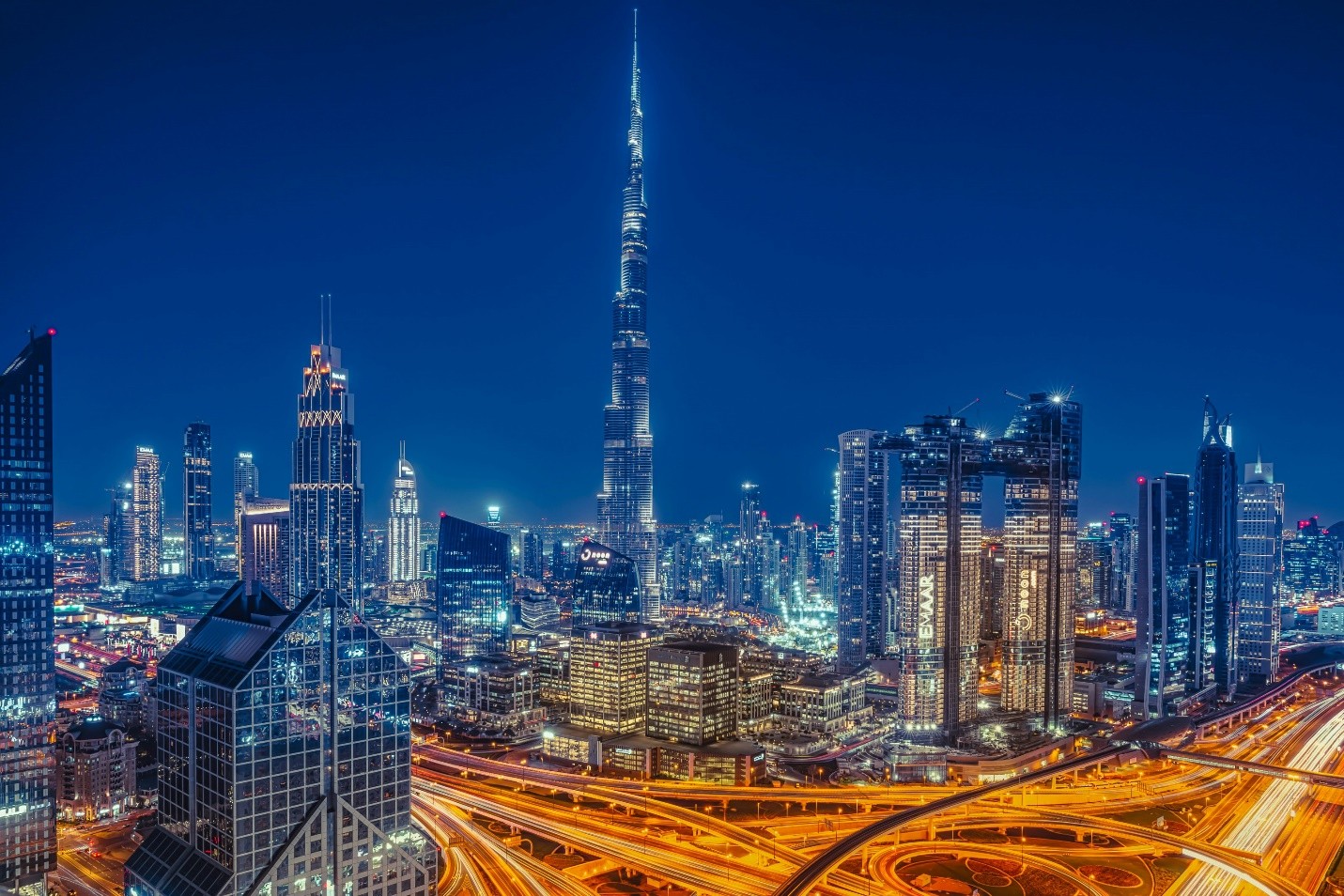
Dubai is not a city that grew organically over centuries. It is a city built by deliberate design — through a succession of master plans, infrastructure investments, and policy decisions that transformed a coastal trading town of 40,000 people in 1960 into a global city of more than 3.3 million today. Between 1960 and 2020, Dubai’s urban and built area increased 170-fold.
That trajectory did not happen by accident. It happened because Dubai’s leadership made a series of long-term commitments and stuck to them across political and economic cycles. The Dubai Vision 2040 Urban Master Plan is the latest and most comprehensive of those commitments — the seventh master plan the emirate has produced since 1960, and the most ambitious in scope.
What is the Dubai Vision 2040 Urban Master Plan?
Announced by His Highness Sheikh Mohammed bin Rashid Al Maktoum in March 2021, the Dubai Vision 2040 Urban Master Plan is a comprehensive, government-issued framework that sets out how the emirate will grow, develop, and reorganize its urban structure over the next two decades.
It is the seventh master plan Dubai has produced since 1960 — and the most comprehensive. Unlike its predecessors, which focused primarily on managing infrastructure and population growth, the 2040 plan integrates land use, sustainability, economic diversification, livability, transport, and cultural heritage into a single spatial framework covering the entire emirate.
The plan was developed by Dubai Municipality, under the oversight of the Supreme Committee for Urban Planning, and is governed by a new Urban Planning Law developed specifically to support its implementation. It sets out a structural layout for the city through 2040, with two formal implementation phases already approved and underway.
Its stated goal: to make Dubai ‘the world’s best city to live in.’
The Five Pillars of Dubai Vision 2040
The plan is structured around five interdependent pillars, each addressing a core dimension of how Dubai will grow and function through 2040.
People & Quality of Life
Economy & Competitiveness
Sustainability & Environment
Urban Character & Heritage
Infrastructure & Mobility
The Plan In Numbers
| 40,000 | Dubai’s population in 1960 |
| 3.3M+ | Population today (2025) |
| 5.8M | Population target by 2040 |
| 7.8M | Maximum projected capacity |
| 170x | Increase in built urban area since 1960 |
| 60% | Land designated for nature reserves & rural areas |
| 55% | Increase in green & recreational spaces |
| 400% | Increase in public beach length |
| 134% | Increase in land for hotels & tourism |
| 168 sq km | Land allocated for commercial activity |
| 25% | Target renewable energy share |
| 20 min | Maximum daily journey under the 20-minute city concept |
From announcement to realization — the implementation timeline
March 2021 — ANNOUNCED
Dubai Vision 2040 Urban Master Plan launched by HH Sheikh Mohammed bin Rashid Al Maktoum. Supreme Committee for Urban Planning established.
May 2021 — GOVERNANCE
Supreme Committee for Urban Planning formally constituted. Urban Planning Law development begins.
2022 — PHASE 2 APPROVED
Phase II of the master plan approved by HH Sheikh Mohammed following successful review of 17 Phase I projects.
January 2023 — ECONOMIC SUPER-LAYER LAUNCHED
Dubai Economic Agenda D33 announced.
→ Goal: Double Dubai’s economy by 2033 and position it among the world’s top 3 global cities.
→ Direct alignment with 2040 Master Plan: land use, infrastructure, logistics, and talent attraction.
2023–2024 — PHASE 1 DELIVERY + POLICY FRAMEWORK
- 17,400 residential plots for citizens planned
- Urban Planning Law developed
- Rural and desert area master plans completed
- 105% increase in green spaces recorded
2024 — STRATEGIC INTEGRATION PHASE
- Integration of D33 economic priorities with spatial planning
- Expansion of 20-minute city concept frameworks
- Mobility and transit-oriented development (TOD) guidelines strengthened
June 2025 — METRO BLUE LINE GROUNDBREAKING
Foundation stone laid for Dubai Metro Blue Line by HH Sheikh Mohammed bin Rashid.
→ 30 km, 14 stations
→ Construction begins across 12 sites with 3,000 workers
2025–2026 — AFFORDABLE HOUSING LAUNCH
Sheikh Hamdan Housing Initiative signed.
→ 17,080 affordable housing units across 6 locations
→ 1.46 million sq m of land activated
End of 2026 — BLUE LINE: 30% COMPLETE
Metro Blue Line construction target: 30% completion by end of 2026.
2026 — COASTAL & PUBLIC REALM DEVELOPMENT
Umm Suqeim Beach & Jumeirah Beach 1 development projects approved and in planning.
→ Focus: public access, tourism economy, and livability
2027–2028 — MOBILITY & URBAN EXPANSION PHASE
- Expansion of mass transit networks beyond Blue Line
- Increased TOD zones around key urban centres
- Logistics and industrial zones aligned with D33 trade goals
September 9, 2029 — METRO BLUE LINE OPENS
Dubai Metro Blue Line scheduled opening date.
→ Connects Dubai Silicon Oasis to Red and Green lines
→ Serves projected 1 million residents
2030 — MID-POINT REVIEW
Formal mid-point review of Dubai 2040 plan expected.
→ Key sustainability targets assessed
→ Dubai Economic Agenda D33 milestones reviewed
→ Urban vs economic growth alignment recalibrated
2031–2035 — ACCELERATION PHASE
- Scaling of urban centres (5-city model)
- Population distribution balancing
- Advanced smart city + AI urban systems deployment
2033 — ECONOMIC AGENDA REALIZATION
- Dubai Economic Agenda D33 milestone year.
- Dubai aims to double its economy and rank among the world’s top 3 global cities.
2040 — PLAN REALIZATION
- Target population: 5.8 million
- Five fully functional urban centres
- Green spaces doubled
- 20-minute city concept operational city-wide
On the Ground: What is Happening Right Now
Plans are written in offices. Cities are built on the ground. This section tracks what is actively underway in Dubai as of March 2026 — the projects confirmed, funded, and in execution under the 2040 master plan.
PROJECT 1: Dubai Metro Blue Line
Status: Under construction — 12% complete as of November 2025
Detail: 30km, 14 stations. Groundbreaking June 2025. More than 4.6 million work hours completed. 3,000 workers across 12 sites. 30% completion target by end of 2026. Opening scheduled 9 September 2029. Connects Dubai Silicon Oasis and Academic City to the existing Red and Green Lines. Economic benefit estimated at AED 56.5 billion by 2040. Expected to increase property values by up to 25% near stations.
PROJECT 2: Affordable Housing Initiative — Sheikh Hamdan Housing Initiative
Status: Signed and in early-phase development
Detail: 17,080 units across 6 locations covering 1.46 million sq m. Locations include Me’aisem 1 (construction started 2025), Al Twar 1 (delivery 2026–2027), and four additional sites. Targets skilled professionals in public and private sectors. Directly supports the 20-minute city concept and community integration goals.
PROJECT 3: Umm Suqeim Beach Development
Status: Master plan approved February 2026
Detail: Approved by HH Hamdan bin Mohammed. Part of the plan’s commitment to a 400% increase in public beach length. Design and development phasing underway.
PROJECT 4: Jumeirah Beach 1 Development
Status: Under review January 2026
Detail: HH Hamdan bin Mohammed reviewed the development project in January 2026. Part of the coastal liveability and tourism expansion strand of the plan.
PROJECT 5: Hatta Development Plan
Status: Active delivery — multiple projects completed November 2025
Detail: Hatta Development Committee delivered a range of projects in November 2025. Hatta is being developed as the region’s leading sustainable mountain tourism destination, integrated into the wider 2040 plan.
Last updated: March 2026 — Urban Intelligence updates this section as new projects are announced, approved, or reach construction milestones.
WHY IT MATTERS FOR INVESTORS
Most coverage of Dubai Vision 2040 focuses on the ambition. The targets are impressive — 5.8 million residents, doubled green space, a 20-minute city. But ambition is not intelligence. For investors, developers, and professionals making decisions in this market, what matters is not the headline targets but the implementation sequence.
Which corridors get infrastructure first? Which areas are designated for density and which for preservation? Where is capital concentrating, and on what timeline? These are the questions that determine real asset value — and they are not answered by the plan document alone. They are answered by tracking execution.
Here is what I observe from inside the market as of 2026:
The Metro Blue Line is the most important signal in the current phase. Its 14 stations define the next infrastructure corridor with precision. Areas within walking distance of those stations — Dubai Silicon Oasis, International City, Dubai Creek Harbour, Mirdif — are receiving a structural upgrade that cannot be reversed. The history of every metro expansion in every city in this document suggests that values along the line will be measurably different in 2030 from what they are today.
The affordable housing initiative is the second major signal. 17,000+ units entering the market in a specific income segment, in specific locations, with government backing. This changes the supply and tenant mix in those areas in ways that will affect adjacent residential and commercial assets.
The Expo City and Dubai South corridor remains the longest-horizon play — the most ambitious, the most infrastructure-dependent, and the most sensitive to execution timing. It is the area where the gap between plan and reality is currently widest, and therefore where the analytical layer matters most.
These are the observations Urban Intelligence tracks in real time.
Follow the Execution — Not Just the Plan
Dubai Vision 2040 is a 14-year story from here. Urban Intelligence documents how it unfolds — in the Insights series, in the area analyses, and in the investment briefings. Start with the free district brief or explore the series.